

How to Use Your Home Air Conditioning Efficiently Year-Round and Save on Energy Bills
Most people in the UK picture air conditioning as something you switch on for a fortnight in July and dread the bill for afterwards. That reputation is a decade out of date — and it's costing homeowners money in the other ten months of the year.
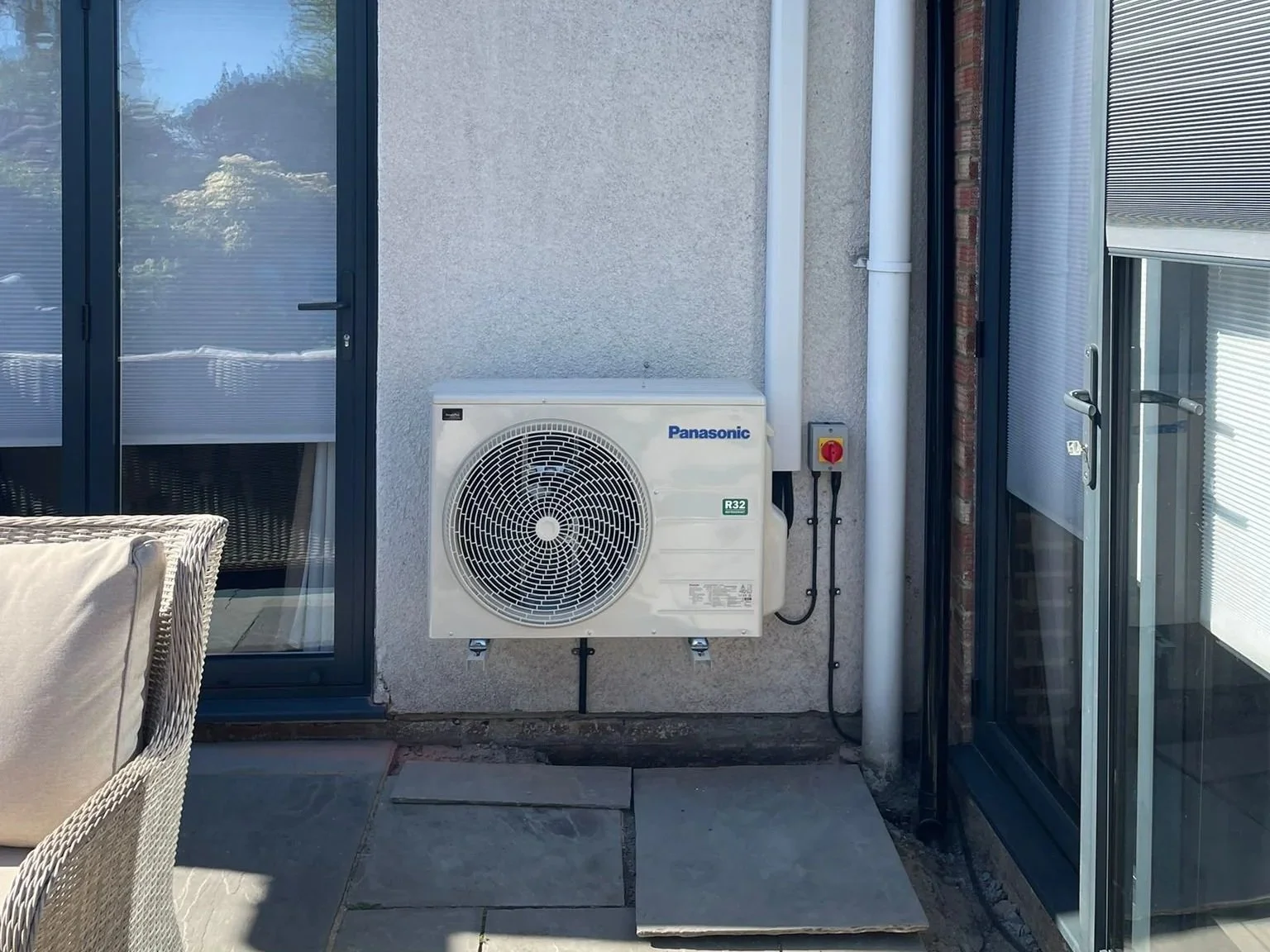
A modern split system is an air-to-air heat pump. It moves heat rather than generating it, which is why a well-specified unit delivers several units of heating or cooling for every unit of electricity it draws. The efficiency isn't in the hardware alone, though. How you run it makes a substantial difference to what it costs.
Here's what our F-Gas engineers tell customers after an installation.
Stop setting it to 16°C
The instinct is that a lower setting cools the room faster. It doesn't. An inverter compressor ramps to full output at startup regardless of the number on the display — the target temperature only determines when it throttles back. Setting 16°C doesn't speed anything up; it just delays the point at which the system stops working hard, then overshoots into territory you'll find uncomfortable.
Use it for heating, not just cooling
This is the part most owners never take advantage of. The same unit runs in reverse, extracting heat from outside air even when it's near freezing, and Panasonic, Daikin and Mitsubishi Electric all build systems designed for UK winter conditions.
Heating one room with a heat pump is generally far more efficient than firing the gas boiler to warm the whole house — particularly in the shoulder months, when you want a warm living room in the evening and nothing else. In October and March, that's most days.
Set schedules, don't leave it running
Nearly every system installed now has Wi-Fi and an app. The efficiency gain isn't in remote control for its own sake — it's in never heating or cooling an empty house.
A heat pump reaches target temperature quickly, so pre-conditioning fifteen or twenty minutes ahead is plenty. There's no benefit to running it all day so the room is comfortable when you get in.
Treat each unit as a zone
A wall unit is specified for a particular room volume. Leave the door open and conditioned air drifts into the hallway while the unit pulls in unconditioned air to replace it — so it never reaches setpoint and never throttles back. That's the single most common cause of a system that seems to run constantly.
If you want climate control across several rooms, a multi-split with an indoor unit per room will use less energy than one oversized unit fighting the whole floorplan.
Keep the filters clean
The indoor unit filters dust, pollen and allergens as well as changing the temperature, and those filters load up faster than people expect — particularly in the first summer, and in any house with pets. A clogged filter restricts airflow, so the fan works harder, the coil runs colder than designed, and efficiency drops well before you notice any difference in performance.
This is a five-minute job. Open the front panel, lift out the mesh filters, vacuum them or rinse under a tap, and let them dry fully before refitting.
One thing worth clearing up about refrigerant
A split system is sealed. Refrigerant isn't consumed the way fuel is, and it shouldn't need topping up as routine maintenance — if a system is genuinely low, it has a leak, and adding gas without finding that leak is treating the symptom. It's also a legal matter: under F-Gas regulations, leaks have to be traced and repaired, and only a qualified engineer can handle the refrigerant circuit.
What an annual service does is check pressures and superheat to confirm the charge is correct, alongside the electrical and drainage checks. Most manufacturer warranties require that service record. Skipping it to save time tends to be the expensive choice later.
Getting the specification right in the first place
Running habits only take you so far. A unit that's undersized for the room will run flat out and never settle into its efficient range; one that's oversized will short-cycle, which is hard on the compressor and poor at controlling humidity. Neither can be fixed by adjusting the thermostat.
That's what a proper survey is for — room dimensions, glazing, orientation, insulation and how the space is actually used, rather than a rule of thumb per square metre. If you're weighing up a system, our air conditioning installation page covers how we approach it.
Need Heating Or Air Conditioning Help?
Our Gas Safe and F-Gas registered engineers cover Dartford, Bexleyheath, Gravesend and across Kent. Get a free, no-obligation quote today.